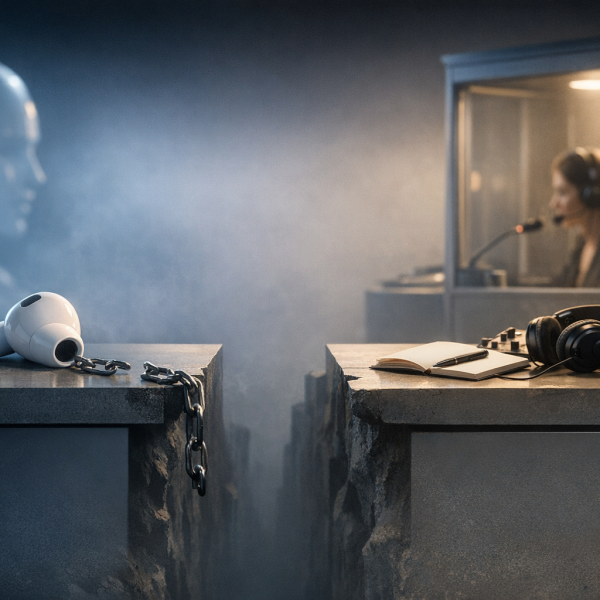
Artificial intelligence has transformed how we communicate, and AI-powered earbuds with real-time translation are among the most hyped innovations. They promise instant multilingual conversations at the tap of a button, from business meetings to online games. Yet, despite fast progress and aggressive marketing, these devices are still far from matching the accuracy, nuance, and reliability of professional human interpreters. Understanding why can help companies, developers, and gamers decide when AI is enough and when expert language support remains essential.
1. Context Is Everything, and AI Still Struggles With It
Human interpreters understand far more than just words; they assess context, intent, relationship dynamics, and cultural expectations in real time. AI earbuds mainly rely on statistical patterns and large language models, which often miss subtle cues like sarcasm, irony, or indirect criticism. In a negotiation, a single misunderstood nuance can change the meaning of a proposal. In a multiplayer game, a mistranslated hint or rule can ruin the experience or lead to unfair play. This context sensitivity is where humans remain far ahead of AI-driven devices.
Context becomes even more critical when dealing with entertainment and gaming content. Characters, story arcs, and in-world jargon form a web of references that must feel coherent and immersive. Professional linguists and localization experts make sure terminology stays consistent with the narrative, user interface, and marketing assets across platforms. This is why game studios still depend heavily on specialized services like Turkish game localization services to ensure their titles resonate authentically with local audiences rather than sounding like literal machine output.
2. Cultural Nuance and Sensitivity Require Human Judgment
Languages carry embedded cultural values, humor, and social norms. Interpreters are trained to navigate these elements and adapt messages so they remain respectful and effective in another culture. AI earbuds, however, usually treat translation as a direct mapping from source to target text, without deep cultural awareness.
For example, a phrase that is harmless in one culture may be offensive in another; a joke may rely on a wordplay or a historical reference that AI fails to recognize. Professional interpreters can decide when to soften phrasing, when to explain, and when to substitute a culturally equivalent expression. This adaptive judgment is especially important in diplomacy, medical settings, legal hearings, and brand communication. An AI misstep in these areas is not just awkward; it can be damaging or even dangerous.
3. Real-Time Performance and Reliability Are Inconsistent
AI earbuds depend on several fragile components: speech recognition, translation, and speech synthesis. Each step can introduce errors or delays, and all of them rely on stable connectivity and clean audio. In noisy environments like conferences, trade shows, or crowded gaming events, microphones may pick up overlapping voices, background chatter, and sound effects. This often leads to garbled transcripts and incorrect translations.
Human interpreters are trained to filter out distractions, distinguish speakers, and maintain coherent output even with imperfect audio. They can ask for clarification when needed, something earbuds cannot easily do without disrupting the flow. When business decisions or competitive matches rely on precise real-time communication, most organizations still prefer the reliability and accountability that come with human professionals.
4. Specialized Terminology Demands Domain Expertise
Many industries use highly specialized language: technical jargon in engineering, legal terminology in courtrooms, and intricate lore in fantasy games. While AI models can be trained on large amounts of data, they rarely match the depth of knowledge that experienced interpreters and translators develop in a specific field.
In gaming, this includes not only game mechanics and character names, but also evolving slang within player communities. Misinterpreting a key ability, objective, or rule can alter how players approach a game. In corporate settings, mistranslating a contractual clause or safety instruction can have costly consequences. Human experts ensure terminology is consistent, accurate, and aligned with current standards, whereas AI earbuds often guess or produce inconsistent terms between sessions.
5. Ethical and Confidentiality Concerns Limit AI Use
Professional interpreters work under strict confidentiality agreements and follow ethical codes that protect client information. AI earbuds, on the other hand, send audio data to cloud servers for processing, raising concerns about privacy, data storage, and potential misuse. Sensitive conversations in healthcare, law, finance, or government settings cannot always be safely routed through third-party servers handled by opaque algorithms.
AI earbuds handle the easy half of interpreting and stop exactly where the difficulty begins, which is a pattern that repeats across the field. Following ai news closely is the fastest way to see how often a demo that looks finished turns out to be a narrow slice of the real task. The gap between the launch video and the working day is where the story usually is.
Organizations dealing with confidential or classified information need clear accountability and data-handling policies. Until AI translation systems provide full transparency, robust on-device processing, and legally binding guarantees, many institutions will continue to rely on certified human interpreters who are personally responsible for safeguarding conversations.
6. Emotional Intelligence and Human Connection Still Matter
Interpreters do more than convert language; they help manage emotions in high-stakes interactions. They can adopt a tone that is gentle in medical contexts, firm in legal disputes, or enthusiastic in live events. They can slow down or speed up content depending on how participants react, and modify delivery to de-escalate tension or prevent misunderstandings.
AI earbuds currently cannot read facial expressions, body language, or emotional subtext with human-level precision. They treat most content the same way, regardless of whether the speaker is joking, panicking, or grieving. This lack of emotional calibration makes AI unsuitable for many situations where empathy and nuance are crucial components of communication, not just optional extras.
7. Legal Liability and Quality Assurance Favor Humans
When an interpretation error leads to financial loss, medical harm, or legal disputes, accountability becomes important. Human interpreters can be certified, insured, and held liable under professional standards. AI earbuds are tools with complex supply chains, unclear responsibility, and terms of service that typically disclaim liability for errors.
Clients and institutions needing dependable language services prefer clear chains of responsibility and quality control. Human interpreters can be vetted, tested, and evaluated; machine systems are harder to audit, especially as models change behind the scenes via updates. Until legal frameworks adapt and technology becomes more transparent, AI earbuds will remain supplementary tools rather than replacements for accountable professionals.
AI Earbuds Are Aids, Not Substitutes
AI translation earbuds are useful for casual travel, quick chats, and low-risk exchanges, and they will continue to improve. However, they are not close to fully replacing human interpreters, particularly where context, culture, confidentiality, and emotional nuance matter. Businesses, creators, and game studios that care about accuracy and audience trust still depend on human expertise for high-quality multilingual communication.
Instead of viewing AI as a rival to interpreters, it is more realistic to treat it as an assistive technology that handles simple tasks while professionals take on complex, sensitive, and creative work. In practice, the future of language services is likely to be hybrid: machines for speed and volume, humans for nuance and accountability. For now, anyone serious about cross-cultural communication should see AI earbuds as convenient tools, not as full-fledged replacements for skilled interpreters and localization specialists.